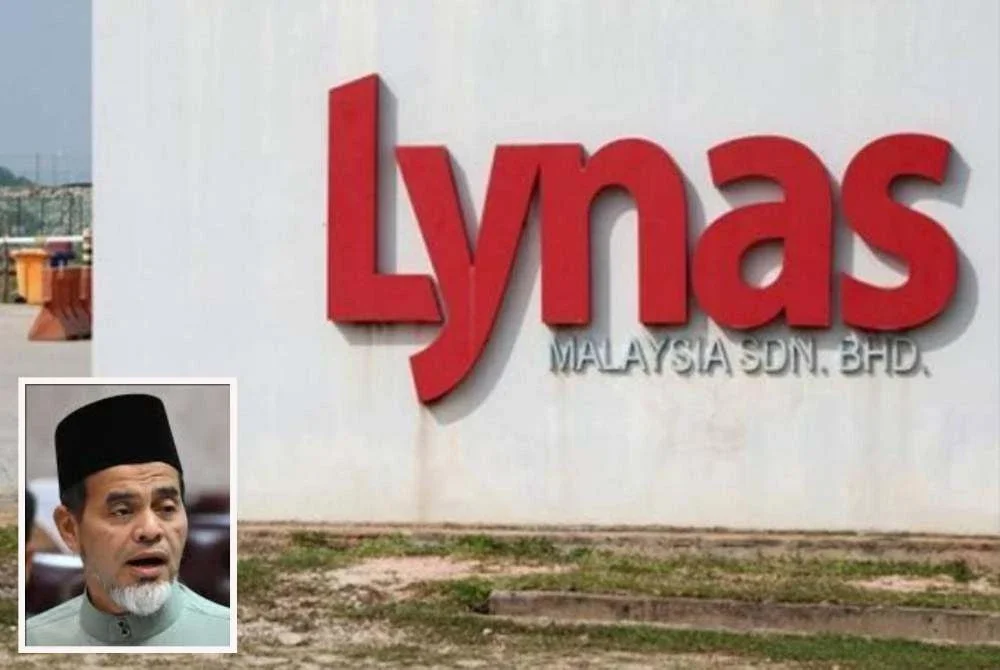
KUALA LUMPUR: Allegations regarding an agreement involving Lynas Malaysia Sdn. Bhd., which is said to supply rare earth oxides to the United States Department of War [DoW Agreement], should be discussed in Parliament.
Kota Putera State Assemblyman (ADUN), Mohd Nurkhuzaini Ab. Rahman, said this is because the issue involves the country’s strategic assets.
“I agree it should be discussed (in Parliament) because it involves national strategic assets. It can be debated and left to the Members of Parliament,” he said today.
Recently, 57 organizations representing various groups within Malaysian society delivered a very firm message opposing the agreement by Lynas to supply rare earth oxides to the United States Department of War [DoW Agreement].
Malaysia’s foreign policy is based on the principle of neutrality (non-alignment). This DoW Agreement would make Malaysia a link in the military supply chain of a country that is currently conducting wars and military operations in various regions.
Previously, Sahabat Alam Malaysia (SAM), among the 57 NGOs, urged the Malaysian government to impose conditions, corrective measures, or if necessary, suspend or revoke Lynas’ license to prevent any deliberate assistance or support for actions that violate international law.
Commenting on rare earth element (REE) mineral resources in Terengganu, Mohd Nurkhuzaini said it represents Malaysia’s largest REE capacity, which should be developed and utilized responsibly for global peace, not to support industries that cause destruction.
He said this stance aligns with universal principles of Environmental, Social, and Governance (ESG), which form the foundation of the state’s REE industry development, covering the entire value chain from upstream activities (exploration and mining), processing, to downstream applications.
“This approach ensures that every phase of development complies with international standards of environmental sustainability, social well-being, and governance integrity.
“The state of Terengganu, in particular, has a more strategic advantage with the presence of heavy rare earth elements (HREE), which are among the most valuable components in the REE group.
“HREE elements such as terbium (Tb) and dysprosium (Dy) have magnetic properties and high-temperature stability that are critical for advanced material technologies,” he said.
He added that in the global context, HREEs are often used in defense systems such as high-performance magnets for radar, precision missile systems, and highly durable military electronic components.
However, he firmly maintained that this strategic potential must not be exploited for purposes that contribute to destructive conflicts or contradict ESG principles.
Instead, he said, the main focus should be on channeling REE resources into industries that support sustainable development and human well-being, such as renewable energy, electric vehicles, medical technology, as well as communication and digital systems that strengthen global peace.